
You are about to leave the Capital Bank Website

DISCLAIMER: When you click Accept you will be leaving the Capital Bank (“the Bank”) website and are going to a website that is not operated by the Bank. We are not responsible for the content or availability of linked sites.

ABOUT THIRD PARTY LINKS ON OUR SITE
The Bank offers links to other third party websites that may be of interest to our website visitors. The links provided in our website are provided solely for your convenience and may assist you in locating other useful information on the Internet. When you click on these links you will leave the Bank’s website and will be redirected to another site. These sites are not under control of the Bank. The Bank is not responsible for the content of linked third party websites. We are not an agent for these third parties nor do we endorse or guarantee their products. We make no representation or warranty regarding the accuracy of the information contained in the linked sites. We suggest that you always verify the information obtained from linked website before acting upon this information. Also, please be aware that the security and privacy policies on these sites may be different than the bank’s policies, so please read third party privacy and security policies closely. If you have any questions or concerns about the products and services offered on linked third party websites, please contact the third-party directly.

A Complete Overview of VA Loans Guidelines

VA Loans

If you are a veteran, thank you for your service! The entire Capital Bank Home Loans team appreciates the sacrifices you have made in defending our country. If you are reading this, then you are most likely considering buying a home and would like to know more about VA loans. VA home loans are a terrific benefit that can help you get into your dream home.


What is a VA Loan?

A VA loan is a low or zero-down payment mortgage option offered to eligible veterans and active duty service members and their families. VA loans are partially backed by the Department of Veterans Affairs (VA) and are issued by private lenders. Capital Bank Home Loans has been a VA lender since 2011, has closed thousands of VA loans and has some of the top ranking VA Mortgage Bankers in the business.

Types of VA Loans

There are several types of mortgage loans you can apply for:

  • Purchase Loan
  • Cash-Out Refinance Loans
  • Interest Rate Reduction Refinance Loan
  • Native American Direct Loan


Ready to purchase a home? Start Now

VA Loan Benefits

So what makes a VA loan so special? VA loans have special benefits only available to eligible veterans, active duty service members, and in some cases, their spouses. VA loans are backed by the government up to 25% of the loan value, making you a less risky borrower to your private lender. This gives you more flexibility in the home buying process if you are eligible.

The primary VA loan benefits include:

  • In some cases, there’s no required down payment. That’s right! Some VA loans are able to offer 100% financing to qualifying veterans.
  • No PMI. One of the biggest benefits of a VA home loan is that there is no private mortgage insurance (PMI). With most loans you’d need to pay private mortgage insurance in addition to your principal and interest payments if you put less than 20% down. A VA loan will not have PMI, even if you decide to put no money down.
  • No restrictions to where you buy or for how much. The Department of Veterans Affairs does not have a limit to how much you can borrow but, keep in mind, you do still have to qualify with proof of income and employment.

Some other VA loan benefits may include:

  • Better terms and interest rates.
  • No penalty fees for paying your loan off early.
  • Fewer closing costs.


Ready to purchase a home? Start Now

VA Loan Requirements

Now that you have an idea of some of the benefits that a VA home loan offers, let’s talk about some requirements. Below are some common requirements for VA loan applications:

Credit score requirements

As with most things related to finance, your credit history is an important factor in securing a VA home loan. Although the VA does not specify a minimum credit score, your private lender might. Check with your mortgage lender to see if they have a minimum credit score requirement.

Can you qualify for a VA loan with a low credit score?

Some lenders let you apply for a VA loan with a low credit score but it may cost you additional fees.

Debt to income requirements

Your debt-to-income ratio (DTI) is another important factor when it comes to VA loans. Again, the exact DTI for loan approval will depend on your lender and personal situation but, generally speaking, you can expect up to 45% to be the maximum acceptable DTI for a VA loan.

Can you qualify for a VA loan if you do not meet the debt to income requirements?

Every situation is unique and to offer the best answer, contact your mortgage banker. In some cases, your debt-to-income ratio can be adjusted by including any residual income you may have.


Ready to purchase a home? Start Now


VA Loan Restrictions

With VA loan requirements covered, it is important to mention there are still some restrictions as to exactly what types of properties you may purchase.

Primary Residence

If you want to use a VA loan to purchase a home, that home must be your primary residence. This means that you and your family must intend to live in the home after purchasing it. VA loans will not cover investment properties or a vacation home.

Your home must qualify for VA loan

This is one of the harder aspects of VA loan restrictions to explain. Before you can purchase your home using VA loans, your property must qualify. The VA will send a specially appointed VA appraiser to assess the house. Here is a good breakdown of the VA property requirements but in general, your home must be a conventional (non-unique) home in good working condition.

Does my home qualify for a VA loan?

Your VA appraiser will have final say in whether your home qualifies for a VA loan. To ensure the best chances for your property to be approved by the VA’s Minimum Property Requirements (MPRs), make sure your home covers the following:

Property condition:

  • Mechanical systems are operating safely and are deemed to have reasonable future utility.
  • Adequate heating supply that is in good working order.
  • Roofing must be in good condition with no major leaks.
  • Property must be free of any structural threats such as termites, rot, or fungus.
  • Generally speaking, it is best to avoid homes listed “as is” as these homes tend to have one or more of the above listed issues.

Conventional property:

Your property must be a conventional family home. VA appraisers tend to dislike unique properties due to the complications they can create when trying to find recent comparable homes. In addition, your lender may have additional restrictions to certain unique homes including but not limited to: ranches, converted churches, and homes with geodesic domes.

What if I want to purchase a condo with a VA loan?

The Department of Veterans Affairs has a condo database of approved developments. If your dream condo is not on the VA’s list, your lender can ask the VA to approve this development. Keep in mind that the VA’s process for adding a new condo development to their approved list can take months and is not guaranteed to be approved once the process is over.


Ready to purchase a home? Start Now


Can I have two VA Loans at one time?

As long as you have enough entitlement, you can have two VA loans at one time. This often comes into play when active duty personnel are transferred and want to purchase a home without selling their existing property.


VA Loan Mortgage Limits

You might be wondering exactly how much house can you buy with a VA loan. According to the VA’s loan limit documentation, eligible veterans, service members, and survivors with full entitlement no longer have limits on loans.

How much can you borrow with a VA loan?

With that being said, it is still up to your lender to determine how large of a mortgage you can borrow. Your mortgage banker will determine the size of loan you can afford by assessing your credit history, income, and any assets you may be holding.


VA Funding Fee

Before we jump into VA loan eligibility and the application process, we would like to mention an often overlooked topic related to VA loans. The VA funding fee is a one-time payment that you will make on a VA home loan. This fee is required by the U.S. government and helps reduce the cost of the loan for U.S. taxpayers. The VA funding fee can be paid for in a variety of ways and by no means has to be paid upfront. When you close on your VA loan, you can choose to pay the VA funding fee by rolling it into the total amount of your loan or pay the full amount at closing. The VA funding fees page has a rate chart that goes into greater detail as to how much you can expect to pay.

Who is exempt from the VA funding fee?

There are a few exemptions to the VA funding fee. The most common is a service disabled veteran who is receiving VA compensation. You may be eligible for a refund of the VA funding fee if you are later awarded disability status from the U.S. Department of Veterans Affairs.


VA Loan Eligibility

Okay this all sounds great, but now you may be wondering, are you even eligible for a VA loan?

Who is eligible for a VA loan?

VA loan eligibility standards differ depending on your status in the military. There are four primary categories that the Department of Veterans Affairs will assess your eligibility from. These categories are active duty, veteran, Military Reserves or National Guard, and military spouse. You can reference the VA loan program eligibility requirements here.

What if I don’t meet the minimum service requirements?

If you do not meet the minimum service requirements for a VA loan, you may still be able to qualify if you were discharged for some of the reasons listed below (for a more comprehensive list, please refer to the VA’s minimum service requirements page):

  • Hardship
  • Reduction in force
  • Certain medical conditions
  • A service-related disability


Ready to purchase a home? Start Now


How to apply for a VA Loan

how to apply for a va loan

Alright, you’ve met the eligibility requirements and you’ready to apply for a VA loan but you might be wondering where to even start.

First, you will need to have a VA Home Loan Certificate of Eligibility (COE). The VA will require some information and documents from you to apply for a COE so it is best to prepare your documents beforehand so that you can get through the application process smoothly.

How to prepare for the VA COE application?

The VA has a comprehensive COE application page that will list out exactly which documents you will need to have present depending on your status within the military. If you are a veteran or surviving spouse, you’ll need a copy of you or your veteran spouse’s discharge or separation papers (DD214). If you are currently serving on active duty, you will need a statement of service signed by your commander or a personnel officer.

How do I apply for my COE?

The VA has an easy to use eBenefits website portal for you to apply for your Certificate of Eligibility. You may also apply for your COE by mail. Simply download VA Form 26-1880 and mail it to the address listed on the form.

Getting Started with the VA Home Loan Application

getting started with VA Loan Application

Now that you have your COE, it’s time to reach out to your lender to get started on your VA home loan application. First, you will need to decide which type of VA home mortgage works best for you. The VA has a few options.

VA Mortgage Loan options

Purchase loan:

If you are a conventional home buyer, you will most likely be looking to secure VA-backed purchase loans. This loan will help you buy, build, or improve a home with a competitive interest rate and the option to put no money down without restriction.

Interest Rate Reduction Refinance Loan (IRRRL):

If you already have a VA home loan and would like to reduce your monthly mortgage payment or interest, an Interest Rate Reduction Refinance Loan (IRRRL) could be the right choice for you.

Cash-out refinance loan:

A VA-backed cash-out refinance loan can help you take cash out of your home equity. This loan will replace your current loan with a new VA loan under different terms. You can also use a VA cash-out refinance to refinance a non-VA loan into a VA-backed loan.

We would also like to mention that the VA offers a Native American Direct Loan (NADL). If you are veteran, and either you or your spouse is Native American, you may qualify for this loan. Because the VA directly backs this loan, you do not need to contact a private lender – the U.S. Department of Veterans Affairs will serve as your lender.


Contact your lender to get started on your VA home loan application

As a VA lender since 2011, Capital Bank has over a decade of experience with helping members of our armed forces buy their dream home. Our lenders can answer any of your questions and guide you through the VA loan process. Our own process is transparent and intuitive to provide you with the smoothest path to closing your home and getting the keys!


Contact one of our top VA mortgage bankers today to learn more about our VA loan process.


(Equal Housing & Member FDIC Logo are standard on the website)
 

Ready to purchase a home? Start Now

What is the QuickClose Process at Capital Bank Home Loans?


Get a Rate Quote! Start Now

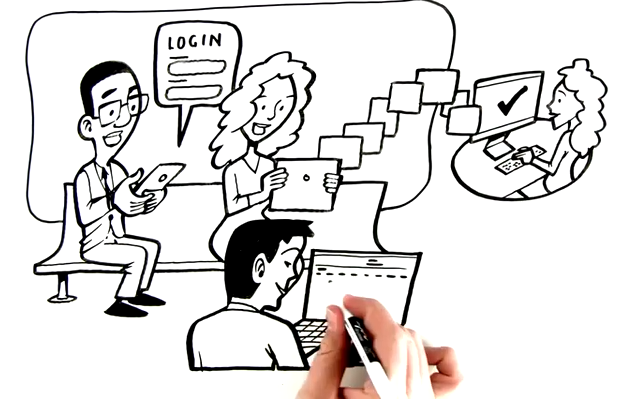
At Capital Bank Home Loans, we’ve made the application process easier and more efficient by digitizing it so it fits into your lifestyle. With our QuickClose process, you set up your login details and begin the application process. This lets you start your application on one device and finish it on another, from wherever you are at your convenience.

The QuickClose process lets you securely upload documents right into your application, giving you step-by-step instructions on what to do next.

But the best part is how easy it is to verify your assets and income information from within the application. No more:

  • Printing,
  • Scanning, and
  • Emailing

Since our application saves your information automatically, it sends you email reminders to help you stay on track. So you can close on your home in as little as 21 days.

Don’t worry, your loan officer will be by your side answering questions like:

  • “What’s title insurance?,”
  • “Can we remove the financing contingency?,” or even
  • “Should I get pre-approved or pre-qualified?”

They’re also there to discuss mortgage options with you so your mortgage payment fits your budget.

Your loan officer is always only a text, email, or phone call away as you move through the Capital Bank QuickClose process, so you’ll have the mortgage you need for the home you want and the confidence to buy your home.

Homeloan Pre-Approved vs Pre-Qualified – What’s the Difference?


Get a Rate Quote! Start Now

Are you beginning your homeowner journey and confused about if you should be pre-approved vs pre-qualified for a mortgage? We can help.

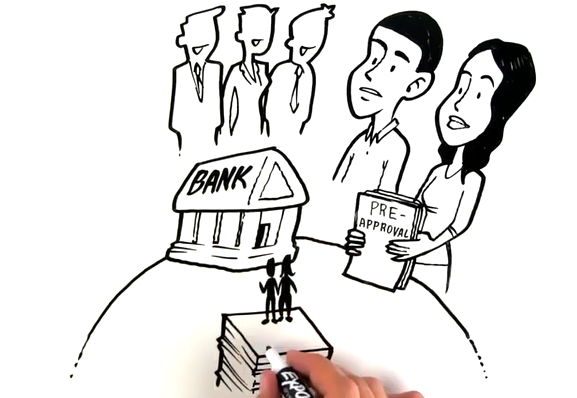
One way to begin your journey is to get pre-approved for a mortgage. Realtors and sellers may prefer you get pre-approved before making an offer on a home.

What is the Difference Between Pre-Approved vs Pre-Qualified?

A pre-approval letter lets you know the maximum amount your bank is prepared to lend you because you’ve provided the following information to an underwriter:

  • Financial,
  • Employment, and
  • Credit information

A pre-qualification is only an estimate of what size mortgage you might qualify for based on a conversation with a loan originator and is not an exact number.

Think of pre-approved vs pre-qualified this way:

  • A pre-qualification is like waiting to buy tickets at the box office on the day of the concert, knowing that tickets are for sale but not sure if you’ll be able to get tickets at all.
  • A pre-approval is like having your concert tickets in hand on your way to the event.

What are the Benefits of Getting a Pre-Approval Letter?

Getting pre-approved lets you:

  • Calculate the house price you can afford so there are no surprises to your budget.
  • Act quickly in a competitive market and reduce the stress of “Will we get it?” or “Can we afford it?”
  • It shows you’re a serious contender, letting the seller know your financing is strong which can ease the seller’s concerns and increase your chance for winning the bid on the home you want.

A pre-approval from Capital Bank Home Loans is good for 90 days. There is no fee and no obligation to work with us, so get started today.

What is a FHA Home Loan? How Does This Type of Mortgage Work?


Get a Rate Quote! Start Now

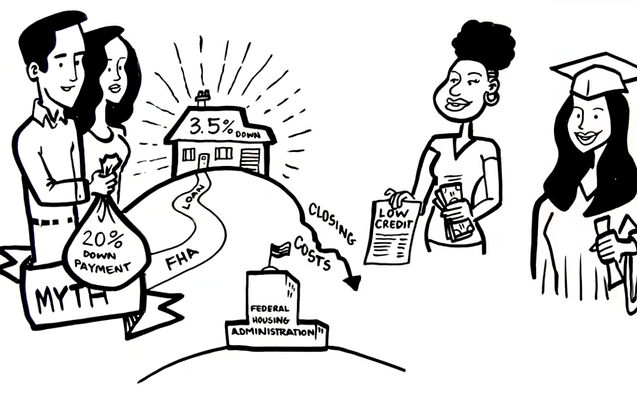
You might think that you need to have enough money saved for a 20% down payment before you can even begin looking for a home.  We’re here to tell you that’s a myth.

There are mortgage programs designed to help lower the total amount of closing costs and make home buying more attainable – even if you’re still building your credit.

You may have heard of an FHA loan or a 203k loan, but what is a FHA home loan? Let’s break it down.

What is a FHA Home Loan?

An FHA home loan is a mortgage insured by the Federal Housing Administration and can be secured with as little as 3.5% down.

This is a great program for first time home buyers because of the lower down payment minimum. Borrowers also can qualify for a 3.5% down payment if they have:

  • Lower credit scores, and
  • Higher than traditional debt to income ratios (which is great when you start out with student debt or other loans.)

How Does a FHA Home Loan Work?

Now that we’ve covered what is a FHA home loan, let’s talk about how it works.

A FHA home loan requires the borrower to have monthly mortgage insurance as well as a Mortgage Insurance Premium (or MIP as it’s often called).

Mortgage Insurance is designed to reduce the risk of loss to a mortgage lender if a borrower defaults on their mortgage payment. MIP can be paid upfront or financed into the mortgage.

A lower down payment through an FHA Mortgage can mean that you set money aside for other things such as home improvement projects or even moving costs.

Mortgage Insurance on an FHA loan is currently permanent, but after you’ve built up enough equity, you may be able to refinance out of an FHA loan.

Always speak with an experienced mortgage loan originator so you can discuss the option that is best suited for you – and really challenge them on what is available to meet your needs, whether it is a low down payment, a maximum monthly mortgage amount for your budget, or both.

What are the Pros and Cons of Buying a Home With An 80 10 10 Loan?


Get a Rate Quote! Start Now

You might have heard that you can buy a home without a 20% down payment – you may have even heard it from us in our video “What is a FHA Home Loan?”

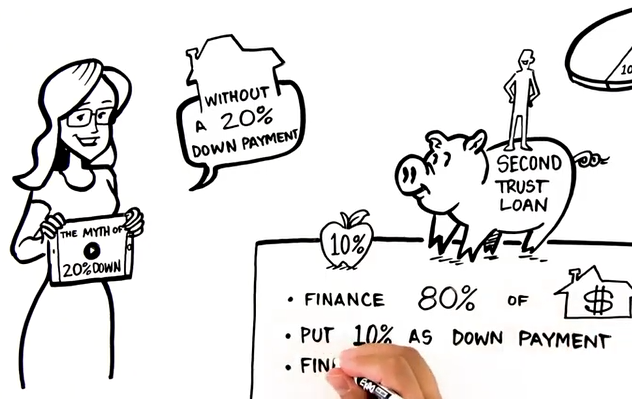
It’s true. Those who qualify can utilize an 80 10 10 loan, otherwise known as a second trust loan or “piggyback” loan, to purchase your home with just a 10% down payment.

Here’s how it works:

  • Finance 80% of the home’s value,
  • Put 10% as a down payment, and then
  • Finance the remaining 10% as a second trust loan or a piggyback loan.

That’s why it’s called an 80 10 10 loan.

What Are the Pros of a 80 10 10 Loan?

The three main pros of an 80 10 10 loan are:

  1. The piggyback mortgage doesn’t require mortgage insurance or PMI. This can be up to 1.5% of the cost of the mortgage value depending on your credit score and down payment. So, you may spend less on the 2nd trust than you would with mortgage insurance.
  2. You may be able to deduct the interest from both loans on your taxes (though you’ll need to consult a tax advisor to determine what, if anything, may be deducted).
  3. It allows you to keep the total mortgage value at or below a “conforming” mortgage loan – which can be helpful when purchasing a home in more expensive areas and help keep the interest rate down.

What Are the Cons?

The two main cons of an 80 10 10 loan are:

  1. The second trust is typically financed with a shorter term and at a higher, variable, interest rate.  This means that the payments may adjust over the term of the loan.
  2. There may be closing costs on the second trust, though they’re typically not much.

Even if you have the 20% down payment, it may be worthwhile to research your options. Using less of your money as a down payment could allow you to possibly pay down debt, apply it to home improvements, help pay for closing costs or even moving expenses.

Always speak with an experienced mortgage loan originator so you can discuss the option that is best suited for you – and really challenge them on what is available to meet your needs, whether it is a low down payment, a maximum monthly mortgage amount for your budget, or both.

How to Keep Personal Info Safe When Getting a Home Loan

Using smartphone and laptop with icon graphic Cyber security network of connected devices and personal data security

Transferring digital information during real estate transactions makes it easy and convenient for everyone to do business. While financial institutions (like Capital Bank Home Loans) have sophisticated cybersecurity systems in place, everyone has to be continually vigilant against cyber-breaches.

As an individual you can be on alert to keep your personal information safe when getting a home loan. Here are some things you can do.

Encrypted Email

Real estate transactions involve a lot of personal information transferred digitally between you, your real estate agent, lenders, title companies, etc. Transmitting these by home and unsecured business email leaves information vulnerable to hackers.

Many providers along the home loan chain now use encrypted email to protect digital transactions. This layer of security keeps your personal information safe – hidden from prying hackers’ eyes that can “see” unprotected emails as they bounce from server to server. If hackers gain information about your identity or real estate transactions, they will try to use that information to their monetary advantage.

What you can do

Expect an encrypted message: At some point, you’ll likely receive email inviting you to login to a secured site to transact business related to your home loan. Encrypted email adds this extra level so that the information you send or receive isn’t floating around among other emails, vulnerable to hackers.

Verify: Before you click on the link in an email inviting you to a secure site, make sure you recognize the person or company named in the message. If not, call a trusted contact like your real estate agent or loan officer. Have them verify that the invitation you’ve received is legit.

Create a new password: Have your own complex password and ready to use when you log in. When you create a user name to log in to encrypted email, a suggested password often will be generated. Don’t click “accept” – not only because it could be a set-up, but also because that’s the last you’ll see of it! You will likely need to log in again to complete a couple more transactions, and you won’t be able to change any of your initial login information without new authentication steps.

Ready to purchase a home? Start Now

Compromised Email

Digital transference of personal information increases opportunity for cyber criminals – and some of that opportunity is netting a big payday from other people’s real estate transactions.

According to Forbes Real Estate Council, scams involving wire fraud often begin with “phishing” – an attempt by hackers to catch sensitive information by posing as a familiar person or company. An innocent response to a phony email helps a hacker gain access to the email server and information stored there – and illegally profit from it.

One of the biggest schemes in real estate transactions is for criminals to assume the email identity of a title company or settlement company. Posing as someone in that company, they send emails to clients with “updated” wire transfer information for home purchase funds – to the criminal’s bank account, not the title company’s bank.

What you can do

Verify all wiring instructions before transferring your money.

Speak to a real person at the legitimate place of business; call or visit the office to make sure you have the correct wiring instructions.

Learn more about what to look for to spot phishing emails. Google has a quiz you can take – you’ll be surprised by the trouble scammers go to, to look legit!

Keep Your Home Loan Experience a Positive One

The Consumer Financial Protection Bureau provides information about protecting yourself from mortgage-related scams. Buying your new home is a very exciting time. Do your own due diligence to make sure cyber scammers don’t spoil it.

Ready to purchase a home? Start Now

What is an Annual Percentage Rate (APR)?

When shopping for a mortgage, lenders will typically provide two different numbers to show the cost of borrowing the money.

  1. The mortgage interest rate, which is related to the cost of borrowing the principal amount of the loan. It is the cost you will pay each year to borrow the money, expressed as a percentage rate. The rate can be fixed or variable, but when it is a variable rate loan, the APR does not reflect the maximum interest rate of the loan.
  2. Annual percentage rate (APR) reflects not only the interest rate but also any points, mortgage origination fees, and other charges that you pay to get the loan.

What is an Annual Percentage Rate vs Interest Rates?

The APR is important because it can give you a good idea of how much you’ll pay on an annual basis for the funds borrowed.

Lenders are obligated to disclose the APR in addition to the interest rate. Since lenders charge different fees, this disclosure was meant to help consumers understand the actual rate for the funds borrowed, which includes the finance charges in addition to the interest rate charged on the principal balance of the loan.

The APR also helps consumers compare overall costs from one lender to the next. Be careful when comparing the APR of a fixed rate loan with the APR of adjustable or variable rate loans, or when comparing the APRs of different adjustable rate loans. You should also know the fees included in the APR, because lender fees and other costs can vary from lender to lender.

Ready to purchase a home? Start Now

What is an Annual Percentage Rate for Mortgages?

While interest is charged on the principal loan balance owed monthly, the APR also includes the other charges or fees and is calculated by spreading your upfront costs over the life of the loan and expressing this as a percentage of the loan amount that you pay each year.

That matters because if you pay off a loan early, your “true” APR may be higher than the one on your loan documents since those costs will be spread over a shorter time period. If your loan includes prepayment penalties, then your actual costs will be even higher, so in some cases the APR your lender provides will be a poor gauge of your actual expenses.

While this may cause the APR to be higher when recalculated based on the shorter period of time you have the loan, you will most likely save a lot of money by paying down your mortgage or paying it off early. You will pay less in actual interest than if you take the full term of the loan to pay it off.

Remember, the amount of your mortgage payment each month that is applied to interest is calculated on the actual principal balance owed. The lower the principal balance the interest is calculated on, the greater the portion of your monthly payment that gets applied back to that principal balance.

Another way APR can be misleading is if you take out a mortgage with a variable interest rate. While APR is intended to more accurately reflect the total cost of your loan, if interest rates rise, and your interest rate adjusts to the maximum allowed under the original terms of the loan, then the APR originally disclosed may not be accurate. The APR a lender discloses on a variable rate loan does not reflect the maximum interest rate on that loan.

Ready to purchase a home? Start Now

APR is One Piece of the Puzzle

What is an Annual Percentage Rate benefit? All smart shoppers want to minimize the cost of borrowing. If you plan to stay in the same home for the entire term of your mortgage, the APR can be one yardstick for comparing fixed-rate loan offers.

But, the overwhelming majority of people move before they’ve completely paid off their mortgage, either upsizing as their family grows, downsizing as they near or enter retirement, or simply moving for work or family reasons.

Likewise, some homebuyers shop for a variable-rate mortgage. If any of this sounds more like you, then minimizing your upfront expenses could be more financially advantageous, even if it means paying a slightly higher interest rate.

Low upfront fees and a higher interest rate could result in a higher APR, so in this case, comparing only APRs while excluding other factors may not provide you with the most accurate way to make a comparison.

What is an Annual Percentage Rate? APR is a useful standardized tool to determine the cost of the funds you are borrowing on a fixed rate loan. It can also be helpful when comparing competing loan products, but it’s just one tool. It’s important to take a hard look at the interest rate and lender fees in a Loan Estimate rather than counting on the APR to tell the whole story.

Ready to purchase a home? Start Now

How to Get Pre Approved For a Mortgage

Are you wondering how to get pre approved for a mortgage? It’s one step in the home buying process you shouldn’t overlook.

What Is A Mortgage Preapproval?

Mortgage pre-approval means that a lender has conditionally approved you for a set home loan amount, based on your credit and finances. Having a mortgage pre-approval letter in your pocket can streamline the mortgage application process later since the lender already has your information and has verified your documents.

Although some information can change and the lender may need to re-verify some of your documents, your credit standing cannot change during the commitment period without impacting your loan.

Changes in the financial conditional and application information could jeopardize the approval status of the application. Avoid taking on additional credit obligations during this period.

Additional contingencies may include an approval up to a maximum interest rate since the rate cannot be locked until the ratified purchase contract is received.

A pre-approval can also give you an edge when you’re ready to make an offer on your new home. The pre-approval shows sellers that you’re committed to buying and that you can back up your offer with financing. In a bidding war, a pre-approved buyer may win over a buyer who hasn’t started the application process.

How to get pre approved for a mortgage starts with knowing what to expect.

Ready to purchase a home? Start Now

How to Get Pre Approved for a Mortgage? Step 1: Check Your Credit

At least three months before you reach out to a lender for a pre-approval, it’s a good idea to review your credit report. This way, you’ll have an idea of what your lender will see and how that might influence your odds of obtaining a pre-approval.

Look for any errors or inaccuracies that could be hurting your credit score. Take steps to dispute the errors, and then follow up one to three months later to verify that they have been corrected. Disputes can take time to resolve.

How To Get Pre Approved for a Mortgage? Step 2: Organize Documents for Your Pre-approval

If you are wondering how to get pre approved for a mortgage you will need certain documents. Get them organized and ready to go for a smooth pre-approval process. The paperwork your lender will need includes:

  • Personal information: You’ll need to provide your Social Security number and date of birth so the lender can order a copy of your credit report.
  • Income information: Your lender will want to see documentation for all sources of income, such as W-2s, pay stubs, recent tax returns, and a profit-and-loss statement if you’re self-employed, as well as additional sources of income, such as Veteran’s Administration (VA) benefits or retirement benefits. If you receive child support or alimony and want to use that income to qualify for your mortgage, you will need to provide the relevant documentation. You do not have to disclose income you receive from a current or former spouse if you don’t want to rely on it to qualify for your loan.
  • Asset information: Your lender will need copies of recent bank and investment account statements, as well as estimated values for any property you own, such as real estate or vehicles.

Ready to purchase a home? Start Now

When Should I Get a Pre-Approval?

Once you have learned how to get pre-approved for a mortgage and gone through the process you need to think about timing.You can get pre-approved for a mortgage at any time, but generally, it’s better to do it as close to the time you plan to shop for a home as possible. There are two reasons for that.

First, mortgage pre-approvals don’t last forever; typically, they’re good for 60 to 90 days. Apply for a pre-approval too early and you run the risk of it expiring before you’re ready to make an offer on a home. If that happens, you may have to start the pre-approval process all over because lenders are unlikely to renew your loan letters. If you have to get a second mortgage pre-approval after the rate-shopping window closes, your credit score may reflect at least one inquiry.

Second, mortgage pre-approvals result in a hard inquiry into your credit history. That means the inquiry gets factored into your credit score. Each new inquiry for credit has the potential to lower your score by a few points, but the credit agencies allow you some time to shop around for the best home loan. Here’s how it works.

All inquiries are coded to show what kind of lender is checking your credit. The impact from applying for credit will vary from person to person based on their unique credit histories.   Looking for a mortgage may cause multiple lenders to request your credit report. To compensate for this, the Fair Isaac Corporation (FICO) Scores ignore mortgage inquiries made in the 30 days prior to the lender pulling your credit report.

So, if you get a pre-approval done within a 30-day window, the inquiries should not affect your scores while you’re rate shopping – In addition, FICO Scores look at your credit report for mortgage inquiries older than 30 days.

If your FICO Scores find some, your scores will consider inquiries that fall in a typical shopping period as just one inquiry. For FICO Scores calculated from older versions of the scoring formula, this shopping period is any 14 day span.

For FICO Scores calculated from the newest versions of the scoring formula, this shopping period is any 45 day span. Each lender chooses which version of the FICO scoring formula it wants the credit reporting agency to use to calculate your FICO Scores.

Home-buying has its challenges, especially if you’re a first-time buyer, but learning how to get pre approved for a mortgage and getting pre-approved shouldn’t be one of them.

Ready to purchase a home? Start Now

How Credit Plays a Role in Getting a Mortgage

Most people Googling “how to buy a home” soon find out that credit score plays a big role in getting a mortgage.

Your credit score shows lenders how to rate you as a borrower. Lenders want evidence that you pay bills and repay loans. A history of using credit plus a good credit score give a lender reassurance that you’ll repay the large sum of money they’re handing you.

Good Credit Gets You Started

Before house hunting, there are steps you can take to fix your credit, like paying down or paying off debt. You’ll also want to pull your credit reports to look for incorrect information that may be dragging your score down. Cleaning up credit gives you the opportunity to present yourself to a lender as a solid borrower.

Better Credit Can Mean Better Loan Terms

A good credit score helps you qualify for a mortgage with the best loan terms. Here’s why.

Because good credit scores tell mortgage lenders that you’re a safe bet to repay a loan, they may reward you for reducing their risk. A credit score above 720 is considered excellent and gets you the best home loan rates, according to the online financial site NerdWallet. NerdWallet says that the lending industry, in general, adjusts the interest rates that they offer based on credit score. On a conventional mortgage, the higher your credit score the lower the interest rate will be. The lower your credit score, the higher your interest rate, which could cost you a lot of money over the life of the loan.

Borrower-required credit scores vary with the type of mortgage. A government-insured FHA loan, for example, has lower credit score and down payment requirements than conventional loans. VA loans also offer terms that may have lower credit score benchmarks since many members of the military won’t need or get credit until they leave the service. If you’re a first-time homebuyer looking for a mortgage program that will make home ownership possible, it pays (literally) to shop around.

Ready to purchase a home? Start Now

One Road to Better Credit

If you’re seriously thinking of home ownership, but need to improve your financial profile first, a good way to build credit is with a secured credit card. Secured cards like the OpenSky® Secured Visa® Credit Card are powerful credit-building tools. You make a security deposit to the card company equal to the amount of your line of credit. Then you can charge purchases to the card like any regular credit card.

Credit cards like the OpenSky card report to the major credit bureaus each month. The work you put into building good credit – using the card for purchases regularly, paying down or paying off your balance each month, on time – can pay off with a greatly improved credit score, even as quickly as six months.

Prepping Your Finances First Is Worth It!

Higher interest rates of even a fraction of a percent can cost you a lot more in home loan payments over the long term. Preparing your finances for homeownership by improving your credit score is a worthy goal to go after!

Ready to purchase a home? Start Now


What is Private Mortgage Insurance (PMI)?

PMI insures your lender for part of your loan, not the full amount, if the loan is not repaid. This typically applies to conventional loans.

PMI may be necessary when a down payment is below 20%. Depending on the credit history of the homebuyer, PMI may cost between approximately 0.25% – 2.00% of the amount borrowed. And if you eventually build 20% equity in your home, you may be able to ask the lender to cancel the PMI.

An FHA loan is an insured loan made by the private lender that allows borrowers to purchase with a down payment as low as 3.5%.

VA loans don’t have any PMI requirements even though they allow a 0% down payment, but have a VA Funding Fee.