You are about to leave the Capital Bank Website

DISCLAIMER: When you click Accept you will be leaving the Capital Bank (“the Bank”) website and are going to a website that is not operated by the Bank. We are not responsible for the content or availability of linked sites.

ABOUT THIRD PARTY LINKS ON OUR SITE
The Bank offers links to other third party websites that may be of interest to our website visitors. The links provided in our website are provided solely for your convenience and may assist you in locating other useful information on the Internet. When you click on these links you will leave the Bank’s website and will be redirected to another site. These sites are not under control of the Bank. The Bank is not responsible for the content of linked third party websites. We are not an agent for these third parties nor do we endorse or guarantee their products. We make no representation or warranty regarding the accuracy of the information contained in the linked sites. We suggest that you always verify the information obtained from linked website before acting upon this information. Also, please be aware that the security and privacy policies on these sites may be different than the bank’s policies, so please read third party privacy and security policies closely. If you have any questions or concerns about the products and services offered on linked third party websites, please contact the third-party directly.

When is the Down Payment Due on a New Construction Home?

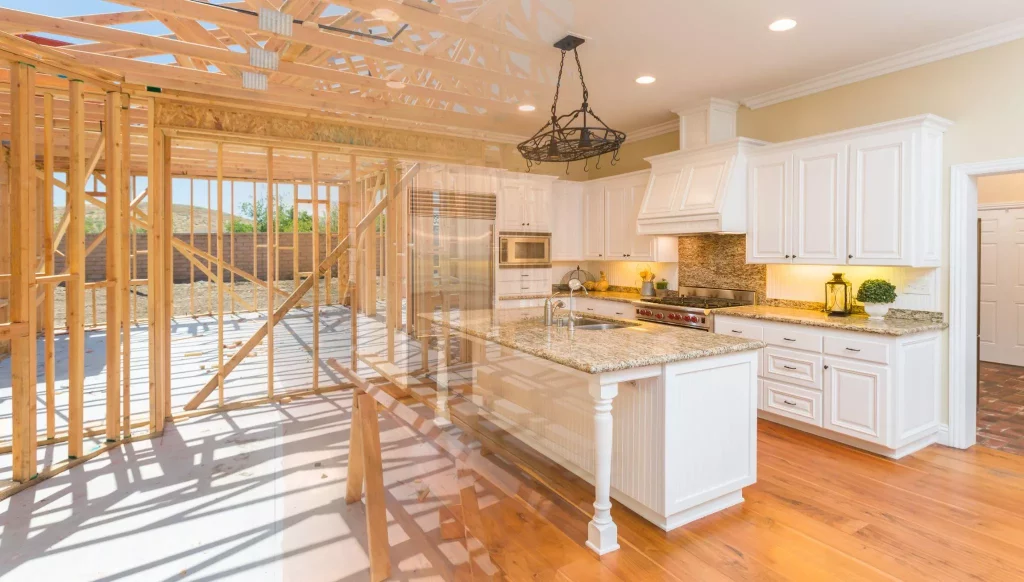
Seeing your dream home come to life right in front of your eyes is an incredible process. It’s something you’ve waited so long for, and you’ve picked out every little detail down to the colors, patterns, and finishes. There’s no denying that building your dream home requires many steps.

One of the most significant milestones comes when it’s time to put money on the table. If you’re trying to plan out the timeline or anticipate the next check you need to write, here’s an explanation of how you can approach the deal.

Financing a New Construction Home

When the down payment is due depends on how you’ve decided to finance your new construction project. There are several ways to go about this, including:

  • Builder financing
  • Construction-only loan

Each of these approaches requires you to put down a different amount at different points within the process. Some methods will require multiple down payments and require you to pay closing costs more than once, while others help simplify the process but require more money up-front.

Let’s go through your financing options one by one.

Builder Financing

Production homes are built to your liking, but they use floor plans (and sometimes materials) from a large builder, who may be building similar homes for multiple clients. You’ll then work with the builder to customize the details, like flooring and cabinets. Production homes are most found in new developments where you can purchase a lot and the soon-to-be-built home as a package.

Production homes are most often available with builder financing. This means the builder finances construction, and when construction is complete, you’ll need to obtain a mortgage. Once it is time to obtain the mortgage, the process is similar to buying an already-built home.

When is the down payment due on a new construction home with builder financing?

To start construction and set up builder financing, you’ll need to put down a builder deposit, which can feel like a down payment. You will also need to pay another down payment when you set up your mortgage after construction is complete.

Generally, the builder deposit is 10% of the total construction costs before construction begins. Once you’ve paid the builder deposit, you may have to pay the full cost of custom upgrades and change orders.

After construction is finished, you’ll take out a mortgage to pay off the builder and buy the lot. This mortgage will require a down payment, which could vary from 3.5% up to 30%, depending on the program and lender.

Builder Financing Process

  1. The builder finances the construction themselves.
  2. The buyer must pay a “builder deposit,” which means around 10% in earnest money.
  3. The buyer might need to pay for any additional upgrades or changes to the new construction home.
  4. When construction is complete, the buyer must obtain a standard mortgage.
  5. The buyer has to pay a down payment and closing costs when setting up the mortgage loan.

Ready to purchase a home? Start Now

Construction-Only Loan

If you’re building a completely custom home from scratch or working with a smaller builder, you will likely be sent down the path of getting a construction-only loan. This loan is obtained before the construction work begins, and it is a short-term loan.

A construction-only loan is paid in full or refinanced into your mortgage once construction finishes. This type of construction loan will require two application processes and two closings. It can become more expensive since a permanent mortgage is needed and will end up paying two separate loans and sets of fees.

How are new construction home loans paid?

When you obtain a new construction loan, you will be responsible for only paying interest until construction is complete. The bank tracks of disbursed funds when a specific portion of the home is completed. These loans are real estate secured but tend to have a higher interest rate due to being short-term.

You can save money on your new construction loan by making sure construction happens on time. If, for some reason, you get to the end of the short-term loan period before construction is complete, you will have to extend your current construction loan. If the construction lender approves, your construction loan either is extended or increased – for a cost.

Assuming your builder stays on schedule, and everything goes to plan, you’ll need to go to a lender and take out a standard mortgage loan when construction is complete. The new mortgage will be used to pay off your new construction loan balance. This will require you to pay closing costs , which will vary depending on the program and lender.

Construction-only Loan Process

  1. Buyer needs to obtain a new construction loan before construction work begins.
  2. These loans are short-term and have a higher interest rate.
  3. The buyer will obtain a standard mortgage when construction is complete.
  4. The buyer will pay closing costs for both the construction loan and mortgage that they obtain later.

Ready to purchase a home? Start Now

Can I pay less to my builder?

If you’re going with builder financing, you can try to negotiate the builder deposit (i.e., “earnest money“) that they require up-front. If they need additional money, like 20%, you could also consider foregoing some of the customizations for any custom upgrades you desire. But remember, the builder is taking on all the risks in a builder financing project, so they only have so much wiggle room.

On the other hand, if you’re trying to bring down your total construction costs (like for a new construction or combination loan), you can negotiate down rates or simplify the project to reduce how much you need to borrow. Instead of cutting corners, you could also plan to do some finishing work yourself, such as painting.

Stretching Your Cash for a New Construction Home

Every borrower wants to save as much money as possible regarding things like closing costs and down payments. The less money you need to pull out of your pocket for those expenses, the more flexibility you’ll have to make your home perfect.

The question is, how can you stretch your dollar for your new construction home? It starts with sitting down with a team of experts who can walk you through your options, talk about interest rates, and even introduce you to some state and federal programs that may be available to save you money.

Ready to take the next step? Call us today to take that initial step in your home-building journey! Our friendly professionals at Capital Bank are ready to sit down with you and help you determine the best way forward to your dream home.




A Complete Overview of VA Loans Guidelines

VA Loans

If you are a veteran, thank you for your service! The entire Capital Bank Home Loans team appreciates the sacrifices you have made in defending our country. If you are reading this, then you are most likely considering buying a home and would like to know more about VA loans. VA home loans are a terrific benefit that can help you get into your dream home.


What is a VA Loan?

A VA loan is a low or zero-down payment mortgage option offered to eligible veterans and active duty service members and their families. VA loans are partially backed by the Department of Veterans Affairs (VA) and are issued by private lenders. Capital Bank Home Loans has been a VA lender since 2011, has closed thousands of VA loans and has some of the top ranking VA Mortgage Bankers in the business.

Types of VA Loans

There are several types of mortgage loans you can apply for:

  • Purchase Loan
  • Cash-Out Refinance Loans
  • Interest Rate Reduction Refinance Loan
  • Native American Direct Loan


Ready to purchase a home? Start Now

VA Loan Benefits

So what makes a VA loan so special? VA loans have special benefits only available to eligible veterans, active duty service members, and in some cases, their spouses. VA loans are backed by the government up to 25% of the loan value, making you a less risky borrower to your private lender. This gives you more flexibility in the home buying process if you are eligible.

The primary VA loan benefits include:

  • In some cases, there’s no required down payment. That’s right! Some VA loans are able to offer 100% financing to qualifying veterans.
  • No PMI. One of the biggest benefits of a VA home loan is that there is no private mortgage insurance (PMI). With most loans you’d need to pay private mortgage insurance in addition to your principal and interest payments if you put less than 20% down. A VA loan will not have PMI, even if you decide to put no money down.
  • No restrictions to where you buy or for how much. The Department of Veterans Affairs does not have a limit to how much you can borrow but, keep in mind, you do still have to qualify with proof of income and employment.

Some other VA loan benefits may include:

  • Better terms and interest rates.
  • No penalty fees for paying your loan off early.
  • Fewer closing costs.


Ready to purchase a home? Start Now

VA Loan Requirements

Now that you have an idea of some of the benefits that a VA home loan offers, let’s talk about some requirements. Below are some common requirements for VA loan applications:

Credit score requirements

As with most things related to finance, your credit history is an important factor in securing a VA home loan. Although the VA does not specify a minimum credit score, your private lender might. Check with your mortgage lender to see if they have a minimum credit score requirement.

Can you qualify for a VA loan with a low credit score?

Some lenders let you apply for a VA loan with a low credit score but it may cost you additional fees.

Debt to income requirements

Your debt-to-income ratio (DTI) is another important factor when it comes to VA loans. Again, the exact DTI for loan approval will depend on your lender and personal situation but, generally speaking, you can expect up to 45% to be the maximum acceptable DTI for a VA loan.

Can you qualify for a VA loan if you do not meet the debt to income requirements?

Every situation is unique and to offer the best answer, contact your mortgage banker. In some cases, your debt-to-income ratio can be adjusted by including any residual income you may have.


Ready to purchase a home? Start Now


VA Loan Restrictions

With VA loan requirements covered, it is important to mention there are still some restrictions as to exactly what types of properties you may purchase.

Primary Residence

If you want to use a VA loan to purchase a home, that home must be your primary residence. This means that you and your family must intend to live in the home after purchasing it. VA loans will not cover investment properties or a vacation home.

Your home must qualify for VA loan

This is one of the harder aspects of VA loan restrictions to explain. Before you can purchase your home using VA loans, your property must qualify. The VA will send a specially appointed VA appraiser to assess the house. Here is a good breakdown of the VA property requirements but in general, your home must be a conventional (non-unique) home in good working condition.

Does my home qualify for a VA loan?

Your VA appraiser will have final say in whether your home qualifies for a VA loan. To ensure the best chances for your property to be approved by the VA’s Minimum Property Requirements (MPRs), make sure your home covers the following:

Property condition:

  • Mechanical systems are operating safely and are deemed to have reasonable future utility.
  • Adequate heating supply that is in good working order.
  • Roofing must be in good condition with no major leaks.
  • Property must be free of any structural threats such as termites, rot, or fungus.
  • Generally speaking, it is best to avoid homes listed “as is” as these homes tend to have one or more of the above listed issues.

Conventional property:

Your property must be a conventional family home. VA appraisers tend to dislike unique properties due to the complications they can create when trying to find recent comparable homes. In addition, your lender may have additional restrictions to certain unique homes including but not limited to: ranches, converted churches, and homes with geodesic domes.

What if I want to purchase a condo with a VA loan?

The Department of Veterans Affairs has a condo database of approved developments. If your dream condo is not on the VA’s list, your lender can ask the VA to approve this development. Keep in mind that the VA’s process for adding a new condo development to their approved list can take months and is not guaranteed to be approved once the process is over.


Ready to purchase a home? Start Now


Can I have two VA Loans at one time?

As long as you have enough entitlement, you can have two VA loans at one time. This often comes into play when active duty personnel are transferred and want to purchase a home without selling their existing property.


VA Loan Mortgage Limits

You might be wondering exactly how much house can you buy with a VA loan. According to the VA’s loan limit documentation, eligible veterans, service members, and survivors with full entitlement no longer have limits on loans.

How much can you borrow with a VA loan?

With that being said, it is still up to your lender to determine how large of a mortgage you can borrow. Your mortgage banker will determine the size of loan you can afford by assessing your credit history, income, and any assets you may be holding.


VA Funding Fee

Before we jump into VA loan eligibility and the application process, we would like to mention an often overlooked topic related to VA loans. The VA funding fee is a one-time payment that you will make on a VA home loan. This fee is required by the U.S. government and helps reduce the cost of the loan for U.S. taxpayers. The VA funding fee can be paid for in a variety of ways and by no means has to be paid upfront. When you close on your VA loan, you can choose to pay the VA funding fee by rolling it into the total amount of your loan or pay the full amount at closing. The VA funding fees page has a rate chart that goes into greater detail as to how much you can expect to pay.

Who is exempt from the VA funding fee?

There are a few exemptions to the VA funding fee. The most common is a service disabled veteran who is receiving VA compensation. You may be eligible for a refund of the VA funding fee if you are later awarded disability status from the U.S. Department of Veterans Affairs.


VA Loan Eligibility

Okay this all sounds great, but now you may be wondering, are you even eligible for a VA loan?

Who is eligible for a VA loan?

VA loan eligibility standards differ depending on your status in the military. There are four primary categories that the Department of Veterans Affairs will assess your eligibility from. These categories are active duty, veteran, Military Reserves or National Guard, and military spouse. You can reference the VA loan program eligibility requirements here.

What if I don’t meet the minimum service requirements?

If you do not meet the minimum service requirements for a VA loan, you may still be able to qualify if you were discharged for some of the reasons listed below (for a more comprehensive list, please refer to the VA’s minimum service requirements page):

  • Hardship
  • Reduction in force
  • Certain medical conditions
  • A service-related disability


Ready to purchase a home? Start Now


How to apply for a VA Loan

how to apply for a va loan

Alright, you’ve met the eligibility requirements and you’ready to apply for a VA loan but you might be wondering where to even start.

First, you will need to have a VA Home Loan Certificate of Eligibility (COE). The VA will require some information and documents from you to apply for a COE so it is best to prepare your documents beforehand so that you can get through the application process smoothly.

How to prepare for the VA COE application?

The VA has a comprehensive COE application page that will list out exactly which documents you will need to have present depending on your status within the military. If you are a veteran or surviving spouse, you’ll need a copy of you or your veteran spouse’s discharge or separation papers (DD214). If you are currently serving on active duty, you will need a statement of service signed by your commander or a personnel officer.

How do I apply for my COE?

The VA has an easy to use eBenefits website portal for you to apply for your Certificate of Eligibility. You may also apply for your COE by mail. Simply download VA Form 26-1880 and mail it to the address listed on the form.

Getting Started with the VA Home Loan Application

getting started with VA Loan Application

Now that you have your COE, it’s time to reach out to your lender to get started on your VA home loan application. First, you will need to decide which type of VA home mortgage works best for you. The VA has a few options.

VA Mortgage Loan options

Purchase loan:

If you are a conventional home buyer, you will most likely be looking to secure VA-backed purchase loans. This loan will help you buy, build, or improve a home with a competitive interest rate and the option to put no money down without restriction.

Interest Rate Reduction Refinance Loan (IRRRL):

If you already have a VA home loan and would like to reduce your monthly mortgage payment or interest, an Interest Rate Reduction Refinance Loan (IRRRL) could be the right choice for you.

Cash-out refinance loan:

A VA-backed cash-out refinance loan can help you take cash out of your home equity. This loan will replace your current loan with a new VA loan under different terms. You can also use a VA cash-out refinance to refinance a non-VA loan into a VA-backed loan.

We would also like to mention that the VA offers a Native American Direct Loan (NADL). If you are veteran, and either you or your spouse is Native American, you may qualify for this loan. Because the VA directly backs this loan, you do not need to contact a private lender – the U.S. Department of Veterans Affairs will serve as your lender.


Contact your lender to get started on your VA home loan application

As a VA lender since 2011, Capital Bank has over a decade of experience with helping members of our armed forces buy their dream home. Our lenders can answer any of your questions and guide you through the VA loan process. Our own process is transparent and intuitive to provide you with the smoothest path to closing your home and getting the keys!


Contact one of our top VA mortgage bankers today to learn more about our VA loan process.


(Equal Housing & Member FDIC Logo are standard on the website)


Ready to purchase a home? Start Now

Earnest Money vs Down Payment: What’s the Difference?

Home buyers signing documents

What is earnest money?

Earnest money, sometimes called a “good faith deposit,” is a sum of money that is included with your offer to purchase a home. Earnest money has become standard, especially in today’s competitive real estate markets. The purpose of earnest money is to tell the seller that you’re serious about purchasing the home.

By backing up your offer with some cash, a seller is more likely to trust that you’ll follow through with the home purchase. This is important because, when the seller accepts your offer (AKA “purchase contract”), the seller is taking their home off the market. If the deal falls through, they’ll have to re-list and spend more time looking for another buyer.

Is Earnest Money Refundable?

While your offer to purchase a home will detail how much money you intend to give as your good faith deposit, you won’t have to send the money until the offer is accepted. Expect the check to be cashed right away, but it does not belong to the seller—the money is held in an escrow account.

Your earnest money will be held in the escrow account until closing. This is because, under certain circumstances, your deposit is . For instance, if the seller backs out of the deal, you will always get your earnest money back. But there are other ways you could get a refund, too.

While the earnest money deposit helps give the seller something to show for lost time if the deal falls through, there are certain “contingency clauses” you can put into your offer that will allow you to back out of the deal and keep your money. Common contingency clauses include the following.

  • If you make your offer “contingent upon appraisal” and the home appraises at a value less than what you intend to pay for it, you will be able to get your deposit back and exit the deal if the buyer and seller don’t agree to an amended purchase price.
  • If you make your offer “contingent upon inspection” and a home inspector fails the property or finds major issues that were not disclosed to you before (i.e., water damage, mold, etc.), you could either adjust your offer, ask the seller to remedy the issues, or back out of the deal.
  • If you make your offer “contingent upon financing” and you fail to secure financing for the home (either because you end up not qualifying or because the lender finds the property unacceptable, you could back out of the deal and get your deposit back.

There are many other contingencies that you can choose to write into your offer, but your real estate agent will be the first one to warn you that adding too many clauses will only complicate things. Sellers will usually favor offers with fewer contingencies because it makes it seem like more of a “sure thing” to them, and they don’t want to take their home off the market for anything less.

While your real estate agent cannot reveal what other offers may have been placed on the home, they can walk you through what standard practice is in the current market, and help you evaluate the property to determine which contingencies are most important to protecting your finances.

What do I have to pay after placing an offer?

Let’s say that your offer is accepted and you pay earnest money into escrow. From there, you’re going to have a few more small expenses that pop up. These expenses are generally within your control, and you may be able to forego some of them, like a home inspection. With that said, these costs generally are only here to protect and benefit you, not the seller.

One of the next key expenses is a home inspection. Inspectors can be hard to find as they’re usually in high demand. Ask your real estate agent for recommendations because you want a professional who is experienced and unbiased (i.e., not friends with the seller).

Another cost you will incur is the title search. This process comes with a small fee. If the title comes up clean, it’s time to close on your mortgage loan, which means putting down the largest sum of money: The down payment and closing costs.

What is a down payment?

Your down payment will be due at the time of closing and it is over and above the “closing costs” that you will need to pay. Closing costs generally equal 3% to 6% of the sale price of the home and help to cover things like the real estate agent fees, escrow services, and so on.

Your down payment, on the other hand, is between you and your lender. Your mortgage lender will expect anywhere from 0% to 30% down, depending on the program you chose. For instance, the USDA has income limits but offers zero-down programs for qualifying areas, while the FHA offers 3.5%-down programs for qualifying buyers.

Other programs, like those through Veterans Affairs, can help you minimize how much money you have to put down. However, putting more down up-front will save you money in the long run. Just think of it this way: Every dollar you put down towards the home is one less dollar you have to pay interest on for the next 15-30 years.

Here are some other things you should note about your down payment:

  • There are many state and federal down payment assistance programs that do not require repayment. A knowledgeable loan officer can help you determine if you are eligible for any of these programs and, if you are, they can explain the application process to you. Call Capital Bank Home Loans at 844-954-1786 and an experienced loan officer will assist you in exploring your options for downpayment assistance.
  • You may be able to use gifted funds to cover the down payment, or a portion of the down payment but there are stringent requirements. Lenders want to be sure that you can show them where any money and who it comes from and prove that it is not a loan.
  • Some programs allow you to take out a second mortgage to finance your down payment and/or closing costs. You should try to avoid this when possible because it means you’ll have very little equity in your home to start with, but it may be an avenue worth considering.
  • You can pay more than the minimum required down payment, and it’s generally advisable to do so. By paying more up-front, you’ll save money on interest in the long run. You could also potentially negotiate a lower interest rate because you’re lowering the lender’s risk.

There’s no doubt that down payments can be expensive and, if you’re trying to cover moving costs and other fees out-of-pocket, it can be hard to think about finding extra money to put down more. Fortunately, there are plenty of options available to you. The right lender will walk you through all of them.

Earnest Money vs. Down Payment

Now you know the difference between earnest money vs down payment requirements: Earnest money is paid at the time you place an offer on the home, and you may be able to get it back if you back out of the deal. Your down payment is due at the time of closing and is the amount of money the lender requires to be paid from your own funds.  The down payment is paid to the seller.

Some state and federal programs could provide a grant or financing for your down payment and/or closing costs. A partner like Capital Bank Home Loans can help walk you through your options.

If you’re interested in learning more about how Capital Bank Home Loans can help you on your home buying journey, reach out to our friendly team of experts today to learn more. Call Capital Bank Home Loans at 844-954-1786 to speak with a knowledgeable, friendly loan officer to get started!


20 vs. 30 Year Mortgage: Which One is Right For You?

New home buyers opted for a 20 year mortgage after considering a 30 year loan option.

For years, the 30-year mortgage has been seen as the gold standard for American homeowners. In fact, according to Freddie Mac, a federally-backed mortgage guarantor, an overwhelming 90% of today’s homeowners opt for a 30-year mortgage to pay back their home loan.

However, home-buying trends are shifting, with Americans starting to delay homeownership due to an aversion to accumulating debt and a rise in remote working lifestyles.

With these new priorities and timelines in mind, is the 30-year “old reliable” approach still the best option for today’s homeowners, or is a 20-year mortgage preferable?

There are a number of factors to examine when deciding which mortgage repayment time frame is best for you. Let’s take a look at some of the top considerations for each.

Ready to purchase a home? Start Now

Things to Consider When Choosing a Mortgage Loan Term

Your Age

Something to consider when selecting a mortgage term is your age. If you’re in your twenties to mid-thirties, you have a long road ahead of you to increase your earning potential and pay off your mortgage over the long term. When your mortgage is paid off, you’ll be relatively young to enjoy the fruits of having this large piece of debt fulfilled and owning your home outright.

Conversely, if you’re in your forties or higher, you may not want to have debt and mortgage payments for thirty years. You’re more likely earning an income in line with your potential and may want to own your home outright sooner. If you have children, you may not want to risk passing a mortgage onto them.

Monthly Mortgage Payment

Because you’re paying for a mortgage over a shorter time period, a 20-year mortgage term results in a higher monthly mortgage payment. Therefore, it’s essential to consider your income, monthly expenses and saving goals when choosing a mortgage term.

Can you comfortably afford a larger monthly mortgage payment? Does doing so still permit you to cover all your bills and expenses while maintaining your saving goals? If so, you may want to consider a 20-year mortgage.

If your income situation is tighter and you’d prefer to have a low monthly mortgage payment, a 30-year mortgage would likely be the better option.

Total Interest

While a 30-year mortgage will result in a lower monthly payment, it will end up more costly cumulatively when compared to the 20-year mortgage. This is because you’ll be paying interest on your mortgage for an extra ten years. Furthermore, interest rates for 20-year mortgages are typically lower. Simply put, the 20-year mortgage incurs considerably less interest than the 30-year mortgage.

While you can write mortgage interest payments off your taxes, interest is still money paid to a bank rather than toward the house’s principal.

Equity Buildup

A 20-year mortgage is designed for you to pay off and own your home outright in 20 years, while a 30-year mortgage is designed to do the same in 30 years. Therefore, with each monthly payment, you’re building equity at a faster rate with a 20-year mortgage than a 30-year mortgage.

If your goal is to build equity in your home more quickly, the 20-year mortgage is a better option. With more equity, you increase your financial net worth, can take out a more substantial home equity loan and can tap into greater equity for another mortgage or other financial pursuit.

The Pros and Cons of a 20-Year Mortgage

Pros:

  • Pay off your loan sooner: With a 20-year mortgage, you’re making larger payments in a shorter timeframe. So, your loan will be paid off a full ten years earlier compared to a 30-year mortgage.
  • Faster equity buildup: Because your timeframe is only 20 years, you gain more equity in your home each month than you would with a 30-year mortgage.
  • Reduce total interest: 20-year mortgages generally offer lower interest rates than their 30-year counterpart. Furthermore, the mortgage loan is for a relatively short time period, resulting in less interest over the long haul.

Cons:

  • Higher monthly payments: The primary disadvantage of a 20-year mortgage is having a higher monthly payment. Boosting the amount of principal you pay each month allows you to substantially pay down the principal on your home, resulting in a shorter loan period overall. This restricts your access to cash on a monthly basis, so if your income is lower or your other expenses are too high, a higher monthly payment may be unmanageable.

Ready to purchase a home? Start Now

The Pros and Cons of a 30-Year Mortgage

Pros:

  • Lower monthly payment: A 30-year mortgage results in a lower monthly payment than a 20-year mortgage. Because you’re spreading out the fulfillment of your mortgage over a longer period, you can reduce your monthly bill. This is especially attractive to those still arriving at their earning potential or those with considerable other expenses.
  • Easier to repay early: Since you’re giving yourself extra time to pay off your mortgage, it might be easier to pay ahead each month. This gives you a comfortable cushion and might result in paying off your mortgage significantly sooner than expected!

Cons:

  • Higher total interest: With a 30-year mortgage, you’ll likely have a higher interest rate compared to a 20-year mortgage. Additionally, you’ll be making monthly payments for ten years longer, so you’ll pay considerably more interest cumulatively.
  • You’ll pay off your home more slowly: If you pay just the minimum monthly payment throughout your mortgage term, it will take you ten more years to pay off your mortgage than if you went with a 20-year mortgage.
  • Less equity buildup: Similarly, since you’re more slowly paying off your home, you’re building equity more slowly.

20 vs. 30-Year Mortgage for First Time Home Buyers

Nowadays, many people are becoming first-time homebuyers later in life. Taking into consideration previously mentioned factors — specifically age, monthly payment and equity buildup — it may be better for an older first-time homebuyer to select a 20-year mortgage. If they can afford a higher monthly payment, they can build equity more quickly and pay off the house sooner.

Consider these tips for first-time homebuyers:

  • Be realistic about your budget.
  • Take steps to maintain and strengthen your credit.
  • Get pre-approved before making an offer.
  • Build an emergency fund with at least 3 months’ worth of expenses.
  • Ask yourself if you’re prepared to stay in your future home for at least five years before selling. If not, it may not be the best time to buy a home.

Ready to purchase a home? Start Now

Which Path Is Best for You?

When selecting a mortgage term length, there are a variety of factors to consider, such as your age, budget and personal homeownership goals. However, every homebuyer’s situation is different, and it’s important that you feel comfortable with whatever mortgage term length that you choose, whether it’s 20 or 30 years.

If your main priority as a homeowner is having the lowest monthly payments possible, then you might want to opt for a 30-year mortgage, with the knowledge that you will ultimately pay thousands of extra dollars in interest.

However, if you are eager to start building equity in your home and can afford a higher monthly payment, you may want to choose a 20-year mortgage. Not only will you own your home sooner, you will also end up paying significantly less in interest over the term of the loan.

Our team of experts at Capital Bank is ready and able to discuss the various options available to you and help you determine your best path. Give us a call today to take the next step on your home purchasing journey!

What’s the Difference Between Fixed-Rate vs. Adjustable-Rate Mortgages?

home buyers researching the difference between fixed-rate and adjustable-rate mortgages

You may be in the market for a home, but not so fast! Before you start shopping for a home, it’s important to understand financing—more specifically, the difference between a fixed-rate or adjustable-rate (ARM) mortgage. Both have their pros and cons—and it all depends on how long you want to spend in the home and what you can afford to pay monthly. Let’s take a deep dive into the differences.

Ready to purchase a home? Start Now

What is a Fixed-Rate Mortgage?

A fixed-rate mortgage sounds like what it is—fixed. Here’s how it works: you have a predictable monthly payment for the life of loan, whether a 15-, 20- or 30-year loan. The duration of the loan impacts the size of the monthly payment, amount of interest paid, amount of time to build equity, and length of time to pay off the loan. In other words, the longer the payoff period, the lower the monthly payment. On the other hand, lower term loans have higher monthly payments and pay less interest over the life of the loan, take less time to build equity and pay off the mortgage faster.

Is a Fixed-Rate Mortgage Right for You?

If you’re considering staying in the home long term, say more than 10 years, a fixed-rate mortgage may be right for you. If you’re a first-time homebuyer, a fixed-rate mortgage may be a smart (and safe) choice. A fixed-rate mortgage gives you prediction—and peace of mind—knowing your monthly payment is the same regardless of whether or not interest rates rise. Is there a downside to fixed-rate mortgages? A small one—if interest rates are high when you first apply for the loan, it’s harder to qualify because the monthly payments are also high.

What is an Adjustable-Rate Mortgage?

Now let’s explore an adjustable-rate mortgage, commonly called an ARM. For the first five to 10 years of the loan, you’ll pay a lower rate and monthly payment than if you had a fixed rate loan. Plus, the rates and payments can be locked in during that time. After that, the interest rate adjusts to market rates and your monthly payments may rise, too. The good news—an ARM has a cap, a limit that your interest rate can rise or drop to in a single period and over the lifetime of your loan.

Is an Adjustable-Rate Mortgage Right for You?

What type of homebuyer would benefit from a variable rate mortgage? An ARM mortgage can be a viable option if you’ll be moving in a few years—you’ll have a lower rate at the start of the loan and lower monthly payment than with a fixed-rate loan. Of course, you’ll have to make a larger down payment and have a strong credit history, so you have to be prepared with more cash in hand and no red marks on your credit.

Ready to purchase a home? Start Now

Is One Better than the Other?

That all depends! If you’re settling in for the long term, a fixed-rate mortgage may be your best choice. If you’re staying for a few short years and you have the means and credit to be approved for an ARM, go for it! You’ll pay less out of pocket over the course of this shorter term loan. But bottom line—what’s the difference in dollars and cents?

Check out our mortgage calculator. Here, you’ll see how much you’ll save or pay over the course of 30 years, for instance, on a fixed-rate loan. Our Mortgage Required Income Calculator can also show you how much income you need to afford a $300,000 home (or any home)!

Conclusion

Fixed or adjustable rate mortgage? We’ve given you the basics on the difference between the two, from predictable, fixed payments over the long term, to a lower rate, bigger down payment and shorter term loan. Before you take your next step, give Capital Bank a call to help you determine which is right for you—because the better informed you are, the better the financial decision you’ll make.

Ready to purchase a home? Start Now

FAQs

Is adjustable or fixed better?
That all depends on your needs. Staying in the home more than 10 years? A fixed-rate mortgage may be right for you. If your plans include a move in under 10 years, an ARM mortgage may be able to save you money with a low 5-year ARM rate or 10-year ARM rate.

Is an adjustable loan or a fixed loan better for a first-time buyer?
Most mortgage lenders agree that a fixed-rate loan is optimal for a first-time buyer. The predictable payments help them sleep at night and keep their budget under control.

Why would an adjustable-rate mortgage be a bad idea?
An adjustable-rate mortgage would not be a smart choice if in it for the long term, past 10 years, for instance. Your initial interest rate and monthly payment would increase after the 10 year-period. There’s no prediction on the new rate and payment, and that can cause a big dent in your budget.

Why would a home buyer choose an adjustable rate mortgage?
If you plan on staying in the home short-term, you can benefit from a 5-year ARM rate or 10-year ARM rate. In both cases, the rate would be lower than a fixed-rate loan. To qualify, you need an excellent credit history and larger down payment.

Should I wait to buy a house or is now a good time?

Buying a New House

The reasons for wanting to buy a first home are so personal! You may be facing a life-changing event like marriage or a new baby; you have a new job with a big salary increase and feel ready to start thinking about buying; or perhaps you’re at an age when all your friends have houses and you want to keep up. If you can remove yourself from the emotional aspect, though, whether or not you should buy is definitely better approached as a financial decision.

There are two main financial components to look at when you’re considering buying: the current housing market and your own money situation. Reviewing these will help you decide whether you should wait to buy a house or if now is a good time.

Ready to purchase a home? Start Now

What Is the Current Housing Market Like?

Demand for homes has been very high in 2021, continuing 2020’s pandemic homebuying frenzy. According to a recent Zillow survey, more than one person in 10 changed homes in the past year. However, the pandemic also made many people stay put, resulting in fewer existing homes on the market than usual. Additionally, fewer new homes are being built or are taking longer to build (high prices for materials and a shortage of supplies and skilled labor are the reported causes).

Because there is more demand for houses than supply, prices have gone way up – more than 15% in the last year. Sales prices are somewhat balanced out by the current very low interest rates, which translate to more affordable monthly payments, low long-term interest costs, and a bigger home budget.

There are many eager buyers out there looking to snap up a home.

How the current real estate market affects first-time home buyers

Having more buyers in the market than sellers usually means each seller gets multiple offers when the property and location are desirable. That usually results in bidding wars, which drives the final home sales price up. According to Redfin, 54% of homes sold above their asking price in May 2021, more than double the previous year.

It’s very difficult for most first-time buyers to win a bidding war. If you’re a typical first-time homebuyer, you’re young, have a low down-payment with high financing and a pretty strict dollar range for your purchase. A seller may be worried that your financing – and the sale – will fall through.
Most sellers want buyers who can make all-cash or high cash offers that carry guaranteed financing or none at all. Those types of buyers – often people who have sold a previous home – are typically able to increase the purchase price they’re offering, too.

Additionally, mortgage lenders imposed tougher qualifying standards for home buyers during the 2020 COVID pandemic shutdown. Because of increased financial risks, lenders now want to see higher credit scores and bigger down payments (and cash reserves) from borrowers. While these standards may be loosening soon with positive U.S. job reports, they could hurt some first-time homebuyers.

Ready to purchase a home? Start Now

What experts predict for buying a home in 2022

The summer of 2021 has seen the hot housing market cool down a bit. Realtors in the Washington, DC metropolitan area, for example, say that there are still bidding wars for many homes but with fewer offers per house than before. House prices are still rising, but at a slower rate than last year. While interest rates are still very low, expect mortgage interest rates to rise to 3.25%-3.5% by the end of the year, according to a number of economists.

Experts predict that the continued rise of interest rates will flatten the current housing boom in late 2022-early 2023 – fewer buyers, so potentially less competition for first-time buyers. However, when home prices remain high and mortgages carry higher interest rates, then it will be more expensive to wait to buy a house than to buy now.
(H1) What Should My Personal Finances Look Like for Me to Buy a House Now?

Here are the money markers that show you could be financially ready to buy a home.

A stable employment history. You have at least two to five years at the same job.

A good grip on your debt. You have a debt-to-income ratio (DTI) of 45% or less (that’s what most lenders are looking for). To calculate your DTI, add up your recurring monthly bills – rent, credit cards, car payments, student loans, etc. Then divide that total by your gross monthly income and multiply by 100 for a percentage.
• (Total monthly payments/Monthly income) x 100 = DTI
• For example, if you earn $75,000 a year before taxes ($6,250 per month), then lenders would like to see your monthly debt lower than $2,812.50.

Savings to cover the cost of buying a house. You’ve saved more than five percent of the cost of a home in your price range. While some loans for first-time homebuyers require a minimal 3%-3.5% down payment, you also need to cover closing costs when you buy/get your loan – this can be in the thousands or 10s of thousands of dollars. Additionally, you should have cash reserves of a couple of months of mortgage payments in case of emergency.

A good credit score. You have a 500 or higher score to qualify for an FHA loan and at least 620 for a conventional loan, though many lenders require higher scores. Borrower-required credit scores vary among lenders and types of loans, so it’s worth putting in the time to better your credit before you buy: excellent credit scores get better loan terms, saving you money over the life of your mortgage.

Income to cover the cost of owning a home. You have income in your monthly budget for utility payments, HOA fees, and repairs in your monthly budget or your savings. Houses require upkeep to maintain your quality of life (and your investment). Most experts estimate you’ll spend 1% of the home purchase price per year on maintenance – 2% if it’s an old house.

Buying a home at the wrong time for your finances is a mistake that can take years to recover from. Read our 21 First Time Home Buyer Tips – everything you need to know before you buy.

Weighing the Difference Between Renting and Buying

Surprisingly, even in major metropolitan areas with sky-high rents, it could cost more to buy than to rent. It may not seem like that, if you’re simply comparing a calculated monthly loan payment to a monthly rental. But if you factor in property taxes and insurance, monthly utilities (rentals often include some of those), and yearly home maintenance, the cost of owning goes way up! Try our Rent vs. Buy calculator to see what might make sense for you.

It’s a different story once you pay down/pay off the mortgage. Over the years, as the balance owed shrinks and house values in your area appreciate, the more equity you will have. Owning a home is almost always a good investment for building wealth, if you put in the time.

Ready to purchase a home? Start Now

Pros and Cons of Buying a House Now

Pros of buying a house now:

  • Take advantage of low mortgage interest rates
  • Take advantage of the many home loan options available
  • Build equity quickly from continuing home-price growth

Cons of buying a house now:

  • Current housing market favors sellers
  • Low housing inventory, so fewer available houses in most large cities
  • Competition from cash buyers/previous homeowners who sold at the height of the market
  • Tough mortgage standards for borrowers

When deciding whether or not to buy a home, it’s helpful to speak to a knowledgeable, experienced loan officer who can help you weigh your loan options.

HOAs and How They Affect the Home Buying Process

Neighborhoods such as subdivisions, planned communities, or condominiums can organize a homeowners association (HOA) to govern the community. HOAs have recently increased in popularity, and Americans have a one in five chance of living in an HOA property. The HOA creates and enforces rules, called Covenants, Conditions, and Restrictions (CC&Rs), that address the maintenance of the properties. Community residents serve on the board of the HOA, and membership is usually a requirement if you buy a house within the community. This means paying the necessary fees, which can go toward keeping up common areas, shared structures, housing exteriors, and other amenities.

Ready to purchase a home? Start Now

Does an HOA Affect the Home Buying Process?

When searching for properties, learning about the pros and cons of HOAs will help you make the best decision for your situation. You have to consider the fees required when you join an HOA. Often the community will come with several perks, making the cost worthwhile, but abiding by the CC&Rs may curb the creativity you want to take with your property. Most importantly, a house with an HOA will change how you qualify and apply for a mortgage.

HOAs and Applying for a Mortgage

Banks and other potential lenders consider how purchasing a property with an HOA affects property values and your financial situation. The required HOA fee could even influence your ability to qualify for a mortgage since it shifts your debt-to-income ratio. Even if the bank offers you a mortgage, a higher HOA fee could mean the mortgage is smaller than you’d need. Failing to keep up with your HOA fees, for whatever reason can also violate the terms of your mortgage, causing problems. Open communication with your mortgage banker about how an HOA mortgage property will affect your finances and ability to secure lending helps smooth potential conflicts.

Are HOA Fees Included in Your Mortgage Payment?

Your HOA fees will constitute a separate monthly or quarterly payment in addition to your mortgage, property taxes, and homeowners insurance. The money could come out of your own bank account or an escrow account, as it depends entirely on the mortgage company whether or not your HOA is included in escrow. Your bank may prefer to include an HOA in an escrow account, even if the payment is separate from your mortgage, because it offers a secure way for lenders to pay the fees themselves rather than depending on the borrower to keep up with the payments.

Ready to purchase a home? Start Now

How HOAs Affect Property Values

A point in favor of HOA argues that it protects the property value of the community. Properties with an HOA are on average valued 4% higher than similar properties not belonging to one. The curb appeal, lawn maintenance, landscaping, and vehicle regulation all contribute to maintaining or elevating this value. Often HOA’s will even have a color palette for house exteriors, creating a desirable cohesion. Unfortunately, if you’re applying for a mortgage, a high HOA fee in a highly valued neighborhood could affect your ability to secure a mortgage, because it changes your payment ratios.

Who Is In Charge of Your HOA?

Every community’s HOA will work differently, and understanding the dynamic in your prospective neighborhood can help you determine whether the property is right for you. Often, people within the community volunteer for their HOAs, and association members elect the people they believe will best represent community interests. Other HOAs are professionally run. You will want to know how the HOA board communicates, how they handle disputes, and how often drama arises. Ask your real estate agent or a community representative for the contact information of the HOA so you can ask questions directly. From there, you can decide if a more active or relaxed HOA suits you better.

Is the HOA Worth It?

The value of an HOA depends on the community and person. Some HOAs offer services such as repairing building lobbies and roofs, community streets, gardens, or sidewalks. Communities with HOAs might feature attractive amenities for their members covered by the fee, like security, landscaping services, gyms, swimming pools, or clubhouses. On the other hand, HOA fees aren’t static and can increase over time with the property value of the community. The emphasis on uniformity doesn’t appeal to all potential buyers, and the CC&Rs may seem arbitrary or strict to someone dreaming of a house their own style. You have to look at the cost of your HOA, what it covers and whether you think it works for you.

HOAs, Mortgages, and You

Are you wondering if HOA fees included in mortgage payments are right for you? HOAs add a new dynamic to the home buying process, and each case is unique. If you have questions about your own property search and mortgage qualifications, our mortgage bankers can walk you through your options.  If you’re interested in more information about applying for a mortgage and what that entails you can work one-on-one with your Capital Bank Home Loans mortgage banker to answer all your questions. We’ll find a financial solution that fits your terms and budgets, without headaches or hassles.

Renting vs Buying a House: Pros and Cons

Get a Rate Quote! Start Now

Should you buy or rent a home? The answer often depends on your finances and plans. When looking at renting vs buying a house pros and cons need to be weighed.

  • What’s the best way to spend your money?
  • How long are you planning to stay in your home?
  • Are you changing jobs or possibly moving?

Renting vs Buying a House Pros and Cons Breakdown

Buying a home is one of the biggest financial decisions you will ever make. And money is an important factor when making this decision.

Buying:

When buying a few items to be aware of are:

  • The down payment amount.
  • Closing costs, insurance and taxes.
  • Monthly utilities.
  • Ongoing home repairs – such as the water heater, plumbing and appliances.

But there are strong reasons to buy:

  • Interest and property taxes may be deductible*.
  • As you pay down the loan principle, you will build equity, which can be an excellent asset for securing a loan or a line of credit.
  • Overall, most home values increase over time, which increases the amount of equity and your return on investment when you sell your house.
  • Once you pay the mortgage off, the home is all yours.

Renting:

When renting the advantages include:

  • Your initial cash outlay will be smaller – often a deposit of a month’s rent.
  • The money you save can be used for other investments.
  • The landlord is responsible for repairs of things like plumbing or electrical.
  • It’s easier to move quickly if you change or lose your job.

Drawbacks include:

  • You’ll never own your home, no matter how many payments you make.
  • There are no tax advantages.
  • Rent could rise or your landlord could sell the property.

It’s important to do what’s right for and your financial situation. Before deciding, do your research and create a list of renting vs buying a house pros and cons

*Consult a tax specialist to learn what interest and property taxes are deductible.

What Are the Types of Mortgages I Can Get?

Get a Rate Quote! Start Now

Buying a home involves many decisions – and choosing the right mortgage is a big one.

While we’re here to discuss your options in greater detail whenever you’re ready, here’s a quick look at the most common types of mortgages, which primarily involve a fixed interest rate over a long period of time, or a rate that can change over time.

The Types of Mortgages to Choose From

Fixed-rate Loans

These are the most popular home loans, and are good if you plan on staying in your home for a longer period of time or if you are concerned about fluctuating interest rates.

Fixed-rate loans are types of mortgages that come with an interest rate that is locked in and won’t change over time.

Meaning your monthly mortgage payment is something that’s predictable throughout the term of the loan. If rates were to drop significantly, you could consider the option to refinance your loan to reduce your payment.

The fixed-rate loans you hear mentioned most often are 30- and 15-year mortgages.

With a 30-year loan, your monthly payment will be lower than a shorter-term loan, but the amount of money you pay in interest over that time will be more.

A 15-year loan means you will pay less in interest, but your monthly payment will be higher because you’ll be paying off the loan amount faster.

Adjustable-rate Mortgages

These types of mortgages are known as ARMs.

They can start with a lower initial interest rate than a fixed-rate loan, but the interest rate is variable and can possibly rise after a set period of time, leading to higher monthly payments.

An ARM can be a good choice for people who know they won’t be in a home for a long period of time.

For more details on home loans, talk to one of our trained mortgage professionals about your various options and what types of mortgages could be best for you.

How Much to Put Down On a House?

Get a Rate Quote! Start Now

Getting a loan for your first home might be easier than you think. The big question is how much to put down on a house?

One of the biggest initial expenses homebuyers face is the cost of the down payment. That’s the amount of money you pay out of pocket toward the cost of the home.

The rest is what you’ll need to take out as a mortgage loan that will be paid off over time – usually 15 or 30 years.

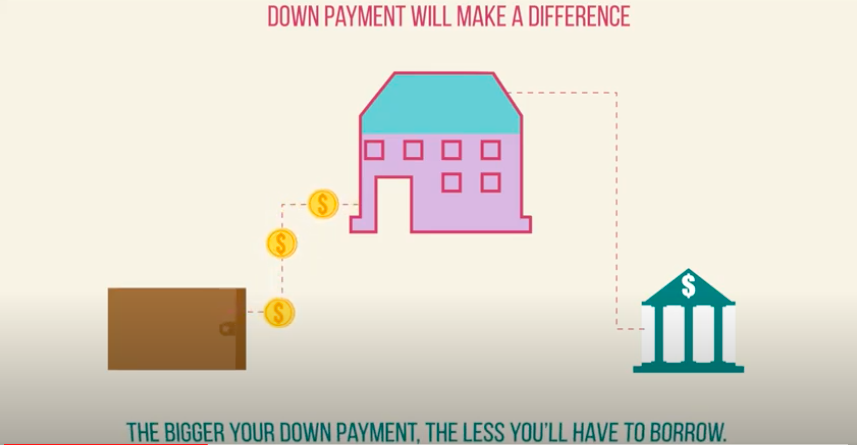
The bigger the down payment you can make, the less you’ll have to borrow. And borrowing less will mean lower monthly payments and less interest paid over the term of the loan.

But not everyone has a lot of money to put down – and that’s OK.

How Much to Put Down on a House?

Some loans will require a down payment of only 3-3.5% or more, depending on the lending program.

That means if you’re looking at a $200,000 house a 3% down payment would only be $6,000, and the loan amount would be $194,000.

But if you can afford a bigger down payment – say 20% – you’d only have to borrow $160,000, which would lower your mortgage payments and reduce your interest costs.

When considering buying a house, lenders will work with you to see if you qualify for a loan. Among other things, they’ll factor in how much you earn, how much you owe on other loans, and what your monthly expenses are.

The size of your down payment could make a big difference.

That’s why if home ownership is your goal, you should consult a lender to see what your options are and what you’ll need to do to make it happen, including how much to put down on a house.

Planning ahead can be a huge help and we’re here to advise you in any way we can – from ways to save for that down payment to what your mortgage choices are.

Talk with us about how you might be able to save for a down payment that can make your home-buying dreams a reality.